
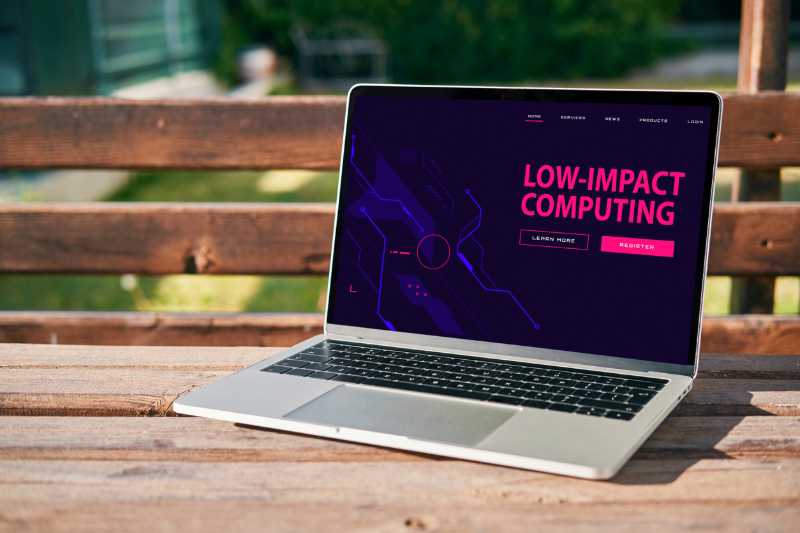
In today’s digital-first world, websites are often seen as weightless — something that simply exists online without consequence. Your Website Carbon Footprint’ is important.
But the truth is, every website has an environmental impact. Behind every page load, image, video, or online search is a chain of servers, data centres, and energy consumption that contributes to carbon emissions.
Your ‘website carbon footprint’ & Sustainability
As businesses become more conscious of sustainability, the web is following suit. Sustainable web design and development isn’t just a trend — it’s quickly becoming an essential part of responsible business practice.
Even better? It brings a wide range of web development benefits for your brand, your customers, and even your Google rankings.
Let’s explore why your website carbon footprint matters, and how sustainable web development can give you a competitive edge.
What Is a ‘Website Carbon Footprint’?
A website carbon footprint refers to the amount of CO₂ emissions produced when people visit and interact with it.
This happens because every time a user loads a webpage:
- Data is transferred across networks
- Servers process requests
- Devices consume electricity
- Hosting infrastructure runs continuously
The more complex and heavy your website is, the more energy it requires, affecting your website carbon footprint.
Large image files, autoplay videos, unnecessary animations, bloated code, and inefficient hosting can significantly increase emissions.
In fact, the internet is responsible for around 3–4% of global carbon emissions, which is comparable to the aviation industry — and that figure continues to rise.
Why Sustainable Web Development Matters More Than Ever
Sustainability is no longer optional. Customers, especially in the UK, increasingly expect businesses to act responsibly.
A sustainable website aligns with wider values such as:
- Environmental awareness
- Ethical business practices
- Long-term thinking
- Efficient use of resources
Making your website greener isn’t just good for the planet — it also creates major web development benefits across performance, branding, and SEO.
Web Development Benefits of a Low-Carbon Website
Let’s break down exactly how sustainable web development can help your business thrive.
-
Faster Websites Create Better User Experience
One of the biggest web development benefits of sustainable practices is improved speed.
Eco-friendly websites are built to be lean and efficient. That means:
- Smaller file sizes
- Cleaner code
- Optimised images
- Fewer unnecessary scripts
All of this leads to faster page loading times, which directly improves user experience.
And visitors are far more likely to stay, browse, and convert on a website that feels quick and effortless.
Google research shows that even a 1-second delay in load time can reduce conversions significantly.
-
Sustainable Websites Improve Google Rankings
Google has made it clear that user experience and performance matter.
Key SEO ranking factors include:
- Page speed
- Mobile optimisation
- Core Web Vitals
- Clean site architecture
Sustainable web development naturally supports these.
When you streamline your website, you’re improving technical SEO — and that’s one of the most valuable web development benefits for visibility.
Plus, Google is increasingly focused on rewarding websites that provide efficient, high-quality experiences.
While “carbon footprint” isn’t a direct ranking factor yet, sustainability-driven improvements are strongly aligned with what Google does prioritise.
-
Reduced Hosting Costs and Energy Use
Sustainable websites require fewer server resources.
That can lead to:
- Lower bandwidth usage
- Reduced hosting costs
- Better scalability
- Less strain on infrastructure
Choosing green hosting providers powered by renewable energy amplifies these results.
One of the most practical web development benefits is that sustainability often saves money over time.
Efficiency is good business.
-
Stronger Brand Reputation and Trust
Consumers are paying attention.
More people want to support brands that care about the environment. A sustainable website signals that your business is:
- Modern
- Responsible
- Forward-thinking
- Aligned with ethical values
This is especially powerful if you’re a business in wellness, charity, education, or service-based industries.
Displaying your commitment to eco-friendly web practices can boost trust and loyalty — two long-term web development benefits that are hard to ignore.
-
Better Accessibility and Simpler Design
Sustainable design often goes hand-in-hand with simplicity and usability.
Eco-conscious development encourages:
- Clear layouts
- Minimal distractions
- Improved readability
- Accessible navigation
This makes your website easier for everyone to use, including visitors with disabilities or slower connections.
Accessibility is another area Google values — and it’s one of the hidden web development benefits of going green.
How to Reduce Your Website Carbon Footprint
So what does sustainable web development look like in practice?
Here are a few impactful strategies:
Optimise Images and Media
Uncompressed images are one of the biggest causes of website bloat.
Sustainable developers use:
- WebP formats
- Lazy loading
- Proper sizing
- Compression tools
Avoid autoplay videos unless necessary.
Use Clean, Efficient Code
Messy code requires more processing power.
Streamlined HTML, CSS, and JavaScript reduces energy use and increases performance — one of the core web development benefits.
Choose Green Hosting
Eco-friendly hosting providers use renewable energy or offset emissions.
In the UK, many hosts now offer sustainable packages.
Reduce Plugins and Unnecessary Scripts (Especially in WordPress)
Every plugin adds weight.
A sustainable WordPress site uses only essential tools, keeping things light and fast.
Build with Mobile-First Performance in Mind
Mobile users make up the majority of traffic.
Sustainable development ensures responsive design, reduced load times, and minimal data transfer.
Monitor Your Website Carbon Score
Tools like Website Carbon Calculator can estimate the emissions per page view.
Tracking performance helps you improve continuously.
The Future: Sustainability as a Ranking and Brand Standard
The internet is evolving.
In the same way mobile-friendly design became essential, sustainable web development is becoming a new standard.
Soon, businesses may be expected to:
- Disclose digital emissions
- Meet eco benchmarks
- Provide faster, greener experiences
- Align with climate-conscious customers
Investing now means staying ahead — and gaining all the long-term web development benefits before your competitors catch up.
Final Thoughts: Sustainable Web Development Is Smart Business
Your website is more than a digital brochure — it’s part of a global infrastructure that consumes real energy every day.
The good news is that sustainable web development offers powerful web development benefits, including:
- Faster performance
- Improved SEO rankings
- Lower costs
- Stronger brand trust
- Better accessibility
- Reduced carbon impact
In short, a greener website isn’t just good for the planet — it’s good for your business and your visibility on Google.
If you’re considering a website redesign or want to improve your site’s performance, sustainability is the smartest place to start.
.